Key Takeaway
Choosing the best Litecoin mining software starts with using reliable platforms. Pionex, Kryptex, Binance, and GoMining each serve different user needs. These services connect your mining efforts to payments, management, and automation.
- Good Litecoin mining software maximizes hashrate while minimizing energy and maintenance costs.
- Reliable platforms provide stable payouts and transparent fee structures for miners. They also show performance statistics in clear, easy to understand dashboards.
- Security features and strong customer support help protect mining rewards. They reduce operational risks from errors, downtime, or unexpected market moves.
What is Litecoin?
Litecoin is a peer-to-peer cryptocurrency created in 2011 as a faster, cheaper alternative to Bitcoin. It uses the Scrypt algorithm, which allows for quicker transaction times and lower fees, making it suitable for everyday payments.

What is Litecoin mining & why it’s needed
Litecoin mining is the process of using computer hardware to solve complex mathematical problems that validate and secure transactions on the Litecoin network.
Each time a miner solves one of these problems, they help add a new block to the blockchain and keep the system running smoothly. Mining is necessary because it maintains the network’s security, prevents fraud or double-spending, and keeps Litecoin decentralized without relying on any central authority. It also creates new Litecoins and rewards miners for contributing their computing power.
Role of mining software in the mining process
Mining software acts as the bridge between your mining hardware and the Litecoin network, allowing your device to perform mining tasks efficiently and communicate with the blockchain.
- Connects your hardware (ASIC/GPU/CPU) to mining pools
- Controls and manages mining operations
- Monitors hash rate, temperature, and performance
- Adjusts settings for better efficiency and stability
- Reports mining results and submits valid shares to the network
Many beginners assume any Litecoin mining software will do the job. In reality, using the wrong platform can drain profits quickly. Hidden fees, unstable pools, or delayed payouts slowly erode your returns. Poor security may expose your accounts, identities, or mined Litecoin balances. Some tools oversell potential earnings and underdeliver on real hashrate performance. I always suggest testing platforms carefully with small amounts first. As a trader and miner, I prioritize transparent metrics and regulation. This guide will highlight trustworthy Litecoin mining software and explain key tradeoffs. By the end, you can choose tools confidently and avoid costly mistakes.
How to Pick the Right Litecoin Mining Software
- Check Hardware Compatibility: Make sure the software supports your ASIC/GPU and your operating system.
- Ensure Scrypt Support: Litecoin uses the Scrypt algorithm—your miner must be optimized for it.
- Look for Stable Performance: Choose software with good hash rate output, temperature control, and basic tuning options.
- Easy Setup: Pick software that matches your skill level, whether simple UI or advanced configuration.
- Reliable & Secure: Download only from trusted sources and look for software with active updates.
- Pool Flexibility: Ensure you can easily add, switch, and manage mining pools.
Best Free Litecoin Mining Software App
Here are some of the best Litecoin mining software options available:
- Pionex: Best for automated LTC trading alongside mining earnings
- Kryptex: Best for mining Litecoin efficiently with optimized hardware
- Binance: Best for managing Litecoin mining payouts and trading
- GoMining: Best for cloud-based Litecoin mining with low maintenance
- Libertex: Best for leveraging Litecoin mining profits in trading
- Hashing24: Best for reliable Litecoin cloud mining contracts
Tried & Tested Best Litecoin Mining Sites/Software
1) Pionex
Pionex is a globally recognized cryptocurrency exchange and trading automation platform designed to simplify digital asset management for all levels of investors. Established in 2019, it has earned a strong reputation for security, transparency, and innovation within the crypto trading ecosystem. The platform integrates in-house trading bots that run seamlessly with no external API requirement, making it safer than most third-party automation tools.
With licenses from reputable regulators and partnerships with major exchanges, Pionex assures a high degree of reliability and liquidity. Its philosophy centers around democratizing access to automated trading and mining strategies, ensuring that even beginners can benefit from optimized market performance. I have personally found it a valuable tool for executing hands-free trades while focusing on broader market strategies. It is ideal for both entry-level miners exploring Litecoin profitability and seasoned traders aiming for consistent efficiency in their portfolios.
Features:
- Automated Trading Bots: Sixteen built-in bots to streamline trading operations easily.
- Grid Trading: Automatically buys low and sells high within price ranges.
- Smart Trade Terminal: Enables advanced stop-loss and take-profit settings.
- Lite Version: Simplified interface tailored for beginners and casual users.
- Deep Liquidity: Aggregated from Binance and Huobi for smooth order execution.
- Competitive Fees: Fixed 0.05% fee structure for makers and takers alike.
- Cloud-Based Security: Ensures continuous uptime with encrypted user data protection.
- Dual Investment: Offers yield strategies based on cryptocurrency price movement.
Visit: https://www.pionex.com/en
2) Kryptex
Kryptex is a widely used mining software designed to help users generate cryptocurrency through their existing hardware. It has built a reputation for stability, consistent performance, and a security-first approach that appeals to cautious beginners and seasoned miners. The platform follows a transparent operational model and maintains strong credibility across mining communities.
Kryptex is known for its straightforward setup and dependable infrastructure, which allows new users to begin mining without technical hurdles. I have found its interface approachable for individuals exploring mining for the first time. It is especially suitable for hobby miners, small-scale operators, and users seeking a trusted tool that runs efficiently on everyday devices. Its overall market presence makes it a reliable choice for those entering Litecoin mining with confidence.
Features:
- Smart Miner: Automatic hardware optimization for improved mining output efficiency
- Hashrate Test: Built-in benchmarking system that analyzes device mining capability
- Instant Payouts: Fast withdrawal processing across multiple supported payment options
- Realtime Monitoring: Live dashboards showing performance, uptime, and earnings updates
- GPU Support: Broad compatibility with modern graphics cards from major vendors
- CPU Mining: Functional mining engine for users with strong processors
- Mining Pool Access: Integrated pool connectivity for stable mining performance
- Earnings Calculator: Accurate profitability estimates based on realtime market data
Visit: https://www.kryptex.com/en/
3) Binance
Binance, launched in 2017 by Changpeng Zhao, has grown into a global powerhouse in the cryptocurrency space. It operates with a focus on transparency, user protection, and operational resilience. Known for its regulatory compliance in multiple jurisdictions, Binance prioritizes user security through constant innovation and advanced safeguards. The platform’s robust infrastructure allows millions of users to trade, mine, and stake assets seamlessly.
For those new to Litecoin mining software, Binance provides a stable and user-friendly ecosystem to start exploring blockchain technology. In my experience, the platform’s consistent uptime and responsive customer service enhance the reliability users expect from a market leader. Binance appeals most to beginners seeking simplicity and professionals requiring deep liquidity and advanced tools without compromising on trust or compliance.
Features:
- Mining Pool: Integrated support for Litecoin and multiple proof-of-work coins.
- Cloud Mining: Flexible contracts with transparent pricing and automatic payouts.
- Security: Multi-tier protection with cold storage and real-time threat monitoring.
- Account Verification: KYC ensures compliance and improves transaction integrity.
- Payment Options: Supports crypto, debit, credit, and third-party payment gateways.
- Global Coverage: Operates in over 100 countries with local language support.
- Reward System: Loyalty points and referral bonuses for active participants.
Visit: https://www.binance.com/
4) GoMining
GoMining is a cloud-based cryptocurrency mining platform designed to make mining accessible to everyone. Founded with the goal of democratizing crypto mining, it allows users to earn mining rewards without owning or maintaining physical rigs. The platform operates globally, leveraging sustainable energy solutions to support its mining operations while maintaining transparency and efficiency.
Its reputation in the crypto community is solid, thanks to its consistent payouts and reliable support. Security remains a top priority, with user data and assets safeguarded through robust encryption and compliance protocols. GoMining appeals most to new miners, investors, and crypto enthusiasts who want stable, long-term mining income without the complexities of hardware setup or electricity costs.
Personally, I have found GoMining’s interface straightforward, even for users new to mining. It brings simplicity and trust to an otherwise complex process.
Features:
- Cloud Mining: Mine Litecoin remotely without physical hardware or setup.
- Transparent Rewards: Real-time visibility into mining income and payouts.
- Asset Tokenization: Each mining power unit is represented by a digital NFT.
- Secure Wallet: Integrated wallet for storing and managing mined Litecoin.
- Easy Withdrawals: Instant Litecoin withdrawals with no hidden transaction fees.
- Smart Contracts: Blockchain-based contracts ensure transparency and reliability.
- Scalable Power: Ability to increase mining capacity anytime.
- 24/7 Support: Constant customer assistance for technical and account inquiries.
Visit: https://gomining.com/
5) Libertex
Libertex is a long-established trading and investment platform known for its transparent operations and commitment to user education. Founded in 1997, it has built a strong reputation among retail traders and investors worldwide. The platform operates under CySEC regulation, which ensures adherence to strict financial compliance standards. Libertex emphasizes security, offering users a safe and stable environment for managing digital assets, including Litecoin-related instruments.
From my experience, Libertex delivers a clean, intuitive interface that makes it ideal for beginners who are transitioning from traditional finance into crypto trading and mining support tools. Its philosophy focuses on clarity and fairness—helping users understand every trade, fee, and market move before execution. This makes it particularly suitable for those who value trust and accountability in crypto trading platforms.
Features:
- Multi-Asset Access: Trade cryptocurrencies, forex, stocks, and commodities in one place.
- User-Friendly Interface: Designed for quick navigation and seamless order execution.
- Advanced Charting: Integrated tools for technical analysis and trade planning.
- Low Spread Model: Offers competitive spreads with commission-based structure.
- Automated Strategies: Supports algorithmic trading setups for advanced users.
- Litecoin Compatibility: Access to LTC trading pairs and mining-related asset exposure.
- Regulatory Compliance: Licensed under CySEC for investor safety and transparency.
Visit: https://libertex.org/
6) Hashing24
Hashing24 is a globally recognized cloud mining platform designed to make cryptocurrency mining accessible without owning expensive hardware. Established in 2012, it partners with leading data centers to ensure stability, transparency, and consistent mining performance. The platform’s infrastructure leverages advanced algorithms and secure encryption protocols, maintaining strong protection of user data and mining contracts.
With a clear commitment to compliance and transparency, Hashing24 has built a solid reputation across the crypto mining community. It primarily serves individuals and small investors who want to mine Litecoin and other cryptocurrencies without managing physical rigs.
As someone who has navigated the complexities of crypto mining for years, I value Hashing24 for reducing operational overheads while keeping mining returns predictable. It offers an ideal starting point for anyone curious about earning Litecoin through cloud mining.
Features:
- Cloud-Based Mining: Full access without needing personal mining equipment.
- Instant Activation: Start mining Litecoin within minutes of registration.
- Real-Time Monitoring: Live dashboards for hashrate and performance tracking.
- Security Layers: Multi-level encryption and two-factor authentication enabled.
- Data Center Network: Uses certified facilities across Europe and Asia.
- Automated Payouts: Daily Litecoin earnings sent directly to user wallets.
- Mining Pool Integration: Partners with major global mining pools for stability.
- Scalable Power: Upgrade hashpower seamlessly as mining needs grow.
- Historical Analytics: Track past earnings and performance trends easily.
Visit: https://hashing24.com/
Comparison Table of Popular Litecoin Mining Apps
| Tool | Supported Algorithms | Supported Hardware | Best Use Case | OS | Fees |
| Pionex | It’s a trading platform, not pure mining-software | No mining hardware required | Crypto trading with built-in bots | Web, Android, iOS | 0.05% trading fee |
| Kryptex | Multi-algorithm (e.g., RandomX, Scrypt, SHA-256) | CPU, GPU, ASIC | Real mining on PC hardware | Windows | Pool/service fees (varies) |
| Binance | SHA-256 (BTC) + others via Binance Pool | ASIC (for pool), none for cloud contracts | Self-mining or cloud mining | Web, mobile | Mining/pool fees + cloud contract & electricity fees |
| GoMining | SHA-256 & others (tokenized hash-power) | None (remote hardware) | Passive BTC mining via “digital miners” | Web, app | Service + maintenance fees |
| Libertex | Not real mining (simulated) | None | Simple “virtual mining” rewards | Mobile, desktop | No stated mining fees |
| Hashing24 | SHA-256 (BTC) | None (cloud mining) | Renting BTC mining hash-power | Web | Contract + daily maintenance fees |
How Litecoin Mining Works
Understanding how Litecoin mining works helps you choose the right software and get steady performance. Mining is the process that keeps the Litecoin network secure. It uses a system called Proof of Work. Your computer solves simple mathematical tasks to verify transactions. When a block is completed, miners earn rewards. I often compare this process to a digital race where every miner tries to finish a task the fastest.
Here is how mining works in a simple and practical way:
- Litecoin uses the Scrypt algorithm. It is lighter than Bitcoin’s SHA-256 and works well on consumer hardware.
- Mining software connects your device to the blockchain and your preferred mining pool.
- Pools combine the power of many miners. This improves the chances of earning consistent rewards.
- Your mining performance depends on hardware, software setup, and energy efficiency.
How to Mine Litecoin Using Mining Software?
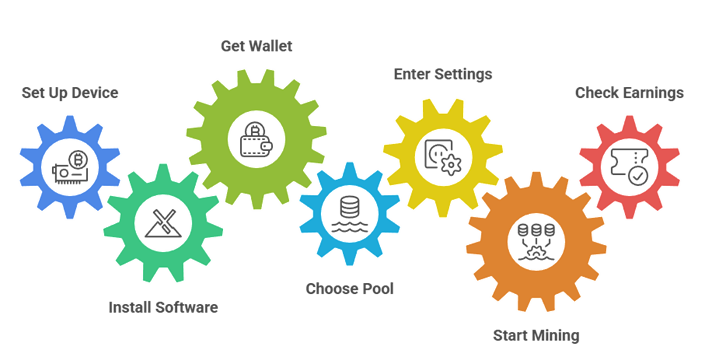
1. Set Up Your Device
Plug in your ASIC miner, connect it to the internet, and turn it on.
2. Install Mining Software
Download a Litecoin mining program and install it on your computer.
3. Get a Litecoin Wallet
Create a wallet and copy your Litecoin address so you can get paid.
4. Pick a Mining Pool
Choose a Litecoin mining pool and get the pool’s URL, port, and worker name.
5. Enter Your Settings
Open the mining software and enter:
- Pool URL
- Worker name or wallet address
- Password (usually “x”)
6. Start Mining
Click Start. The software will begin mining automatically.
7. Check Your Earnings
Visit your mining pool’s website to see your earnings and payments.
Common Problems & Troubleshooting
1. Low Hash Rate
A low hash rate reduces your overall mining efficiency and earnings.
Possible Causes & Fixes
- Underclocked hardware: Ensure your GPU/ASIC settings aren’t limiting performance. Increase core clock or reduce throttling as needed.
- Incorrect mining software configuration: Verify your intensity, thread concurrency, or work size settings. Reset to defaults if unsure.
- Outdated drivers: Update GPU drivers or ASIC firmware to ensure full performance.
- Thermal throttling: If your device overheats, it may slow down automatically. Improve ventilation, clean dust, or reduce overclocks.
- Background applications: Close unnecessary programs consuming GPU/CPU resources.
2. Connection Issues
Mining software may fail to connect to a pool or lose connection intermittently.
Possible Causes & Fixes
- Incorrect pool URL or port: Double-check the pool’s official address and port number.
- Firewall or antivirus blocking: Whitelist your mining application or open necessary ports.
- Internet instability: Test your connection and switch to a wired network if possible.
- Pool downtime: Check the pool’s status page or try connecting to a backup server.
3. Hardware Not Detected
If your mining software doesn’t detect the GPU or ASIC, mining can’t start.
Possible Causes & Fixes
- Missing or outdated drivers: Install the latest drivers for your hardware.
- Unsupported device: Ensure the miner supports your specific GPU/ASIC model.
- Loose connections: Check PCIe cables, risers, and power connections.
- USB/PCIe riser issues: Replace faulty risers commonly used in multi-GPU rigs.
- Disabled device: On Windows, check Device Manager for errors; re-enable or reinstall hardware if needed.
4. Frequent Crashes or Overheating
Instability can stop mining and damage hardware.
Possible Causes & Fixes
- Excessive overclocking: Reduce core clock, memory clock, or voltage settings.
- Inadequate cooling: Add more fans, reapply thermal paste, or improve airflow.
- Power supply issues: Ensure your PSU provides enough wattage for the entire rig.
- Driver conflicts: Perform a clean driver installation.
- Mining software bugs: Update to the latest stable mining software version.
5. Incorrect Pool Settings
Incorrect configuration will prevent successful mining.
Possible Causes & Fixes
- Wrong username/worker name: Follow the pool’s required worker format (e.g., username.worker1).
- Incorrect password field: Some pools require specific password strings like x or custom difficulty settings.
- Wrong algorithm selection: Litecoin uses Scrypt, not SHA-256 — make sure the miner is set to Scrypt.
- Misconfigured config file: Check for typos or missing characters in your .conf or command-line arguments.
- Authentication errors: Reset your pool credentials if you’ve recently changed your password or account details.
How to Maximize Cloud Mining Profits?
1. Choose the Right Cloud Mining Contract
Use reputable providers with transparent pricing. Compare contract lengths, fees, and break-even points before purchasing.
2. Mine When Market Conditions Are Favorable
Mining is more profitable when Litecoin’s price rises or network difficulty drops. Holding your mined coins during low prices can increase long-term returns.
3. Reduce Fees & Use Bonuses
Pick low-fee contracts, avoid unnecessary withdrawals, and take advantage of promotions, discounts, and referral rewards.
4. Allocate Hash Power Smartly
If your provider allows it, adjust or increase hash power during low-difficulty periods or switch to more profitable Scrypt coins that auto-convert to LTC.
5. Track Earnings Regularly
Monitor daily payouts, difficulty changes, LTC price movements, and maintenance fees so you can adjust your strategy for better profitability.
LTC Mining FAQs
Is Litecoin Mining Still Profitable?
Litecoin mining can still be profitable, but it depends on electricity costs, hardware efficiency, and LTC’s market price. ASIC miners provide the best returns, while GPUs and CPUs rarely profit today. Profitability fluctuates with network difficulty, so miners should regularly calculate expected earnings using mining calculators before investing in equipment.
Is free LTC mining really possible?
Free Litecoin mining isn’t realistically possible. “Free mining” sites often provide tiny faucet-like rewards or are scams. Real mining requires hardware, power, and maintenance costs. Cloud-mining trials may offer small returns, but sustainable earnings require paid resources. Always verify platforms before using them to avoid fraud and security risks.
Is GPU or CPU mining better for Litecoin today?
Neither GPU nor CPU mining is effective for Litecoin today. The network is dominated by ASIC miners designed for the Scrypt algorithm, delivering far higher hash rates and efficiency. GPUs and CPUs consume more power than the value they generate, making them unprofitable and unsuitable for serious LTC mining operations.
Which miner is best for Litecoin?
ASIC miners built for Scrypt—such as Bitmain Antminer L7 or Goldshell LT6—are currently the best options for Litecoin mining. They provide high hash rates, strong energy efficiency, and stable long-term performance. Choosing reputable hardware ensures better profitability, lower maintenance issues, and compatibility with major LTC mining pools.
Which Litecoin mining software is best for beginners?
For beginners, software like EasyMiner, MultiMiner, and NiceHash (for indirect LTC earnings) offers simple setup, visual dashboards, and automated configurations. These tools reduce complexity, making ASIC or multi-coin mining easier to manage. They also support major pools and provide basic performance statistics for users learning to optimize their mining.
Does mining software affect overall hash rate?
Yes, mining software can impact hash rate through algorithm optimization, driver compatibility, and hardware tuning. Efficient software reduces stale shares, improves stability, and maximizes performance. While hardware determines the upper limit, well-optimized miners like CGMiner or BFGMiner can fine-tune device efficiency, ensuring consistent hashing under ideal operating conditions.
What settings should I optimize for higher LTC mining efficiency?
Optimize your miner by adjusting clock speeds, voltage, fan settings, and pool configurations. Maintaining low temperatures enhances stability and prevents throttling. Use the closest, most reliable mining pool to reduce latency. Regular firmware updates, proper airflow, and monitoring for hardware errors also improve long-term hash rate and energy efficiency.
How long will it take to mine 1 Litecoin?
The time to mine 1 LTC depends on your ASIC miner’s hash rate, pool luck, and network difficulty. High-end ASICs may earn 1 LTC in days, while smaller miners could take weeks. Mining through a pool distributes rewards more consistently, allowing miners to accumulate Litecoin gradually based on their contributed hashrate.
Can mining software damage my computer or GPU?
Mining software itself doesn’t damage hardware, but prolonged high-load operation can. Excessive heat, poor airflow, or overclocking can degrade components over time. ASICs are designed for constant mining, while GPUs and CPUs are not ideal for Litecoin. Proper cooling, monitoring temperatures, and avoiding extreme settings help prevent hardware wear.
How do I keep my Litecoin mining setup secure?
Secure your mining setup by using trusted software, enabling two-factor authentication on pool accounts, and isolating mining devices on a separate network. Keep firmware and mining programs updated, avoid suspicious downloads, and protect wallets with strong passwords. Monitoring dashboards for unusual activity helps prevent unauthorized access and malware risks.