Key Takeaway
Web3 wallets like Zengo, Ledger Flex, and MetaMask connect everyday users to decentralized apps, DeFi platforms, and NFTs, while securing digital assets and identities across multiple popular blockchains worldwide.
- Web3 wallets hold private keys and secure sending and receiving assets.
- They serve as Web3 identities, logging you into dapps and protocols.
- Strong wallets balance security, simplicity, network coverage, and costs for users.
- Different wallets support different networks, tokens, and DeFi features and integrations.
- Choosing the right wallet influences portfolio security, flexibility, and long term growth.
List of Best Web3 Wallets (Detailed Review)
The top Web3 wallets for 2025 include hardware options like Ledger Flex, as well as software wallets like Zengo and MetaMask, catering to various user needs and preferences.
- Zengo: Best for secure keyless crypto access and recovery simplicity
- Ledger Flex: Best for hardware-level crypto security with flexible connectivity
- MetaMask: Best for seamless browser-based Web3 dApp interactions
- Trust Wallet: Best for multi-chain mobile crypto and NFT management
- Coinbase: Best for beginner-friendly crypto storage with easy purchases
- Binance: Best for active traders needing integrated wallet and exchange
- Kraken: Best for regulated crypto custody with strong security controls
Which Web3 Wallet is the Best for You?
1) Zengo
Zengo is a non-custodial Web3 wallet that has gained recognition for its keyless security infrastructure, which eliminates the risks associated with traditional private keys. Founded in 2018, the platform has established itself as one of the most secure and user-friendly gateways into the decentralized economy. Zengo’s security model is powered by advanced cryptography and threshold signatures, ensuring that user funds remain safe even in the event of device loss or theft.
The wallet is ideal for users who value ease of use without compromising safety — from beginners exploring digital assets for the first time to experienced traders managing diverse portfolios. Personally, I find Zengo’s seamless onboarding process and strong reputation among the crypto community reassuring. Its emphasis on user empowerment through technology makes it a preferred choice for anyone entering Web3 securely.
Zengo Standout Features
- Keyless Security: Uses MPC cryptography to eliminate traditional private key vulnerabilities.
- Biometric Login: Facial recognition ensures secure and convenient access.
- Non-Custodial Design: Users maintain full control of their assets at all times.
- Recovery Kit: Secure recovery process without traditional seed phrases.
- NFT Management: Enables seamless storage, viewing, and sending of NFTs.
- In-App Trading: Built-in exchange for quick swaps between popular assets.
- DeFi Access: Connects easily with decentralized apps and Web3 services.
- Backup Encryption: Recovery information stored securely on the cloud.
- Hardware-Free Security: No hardware wallet required for institutional-level safety.
- Transaction Control: Adjustable network fees and real-time confirmations.
Pros:
- The recovery process is easy and stress-free.
- Security protocols exceed most mobile wallet standards.
- I like that biometric login removes password worries.
- Transaction confirmations happen quickly without delays.
Cons:
- I wish it supported more DeFi integrations natively.
- There is no desktop version available yet.
Expert Insights: Why Consider Zengo?
Zengo is a next-generation Web3 wallet designed to redefine digital asset management. It stands out for its innovative approach to security and accessibility, making it a reliable option for users seeking both simplicity and peace of mind when managing their cryptocurrencies and NFTs.
Visit: https://zengo.com/
2) Ledger Flex
Ledger Flex is a next-generation crypto wallet developed by Ledger, a company long respected for its security standards and commitment to user protection. The tool reflects Ledger’s broader philosophy of safeguarding digital assets through rigorous engineering and strong cryptographic principles. It is backed by a consistent track record in the hardware wallet market, which helps new users feel confident when moving from exchanges to self-custody. Ledger also maintains a visible presence in the global crypto ecosystem, adding to its credibility.
This wallet suits beginners, mobile-first users, and individuals seeking flexible onboarding without technical barriers. I find that the learning curve stays manageable even for cautious users. It also works well for those wanting a reliable companion to start exploring decentralized applications without feeling overwhelmed.
Ledger Flex Standout Features
- Modular design: Swappable components allow easy personalization and enhanced comfort.
- Mobile pairing: Smooth Bluetooth connection ensures consistent on-the-go wallet access.
- Secure element: Dedicated chip safeguards keys against advanced physical attacks.
- Recovery setup: Clear guides support structured key restoration for emergencies.
- Biometric lock: Fingerprint access adds an extra verification layer for wallet entry.
- Multi-chain support: Wide asset compatibility opens broader investment opportunities.
- Offline signing: Air-gapped transaction approval strengthens overall operational safety.
- Durable build: Lightweight materials increase portability without reducing robustness.
- NFC readiness: Tap interactions simplify certain workflows in supported ecosystems.
- Firmware updates: Regular releases maintain security posture and ecosystem stability.
Pros:
- The setup feels simple for new users.
- I appreciate its smooth pairing with mobile devices.
- Wallet navigation stays clear for most beginners.
Cons:
- I experienced delays during some firmware installations.
- The wallet may feel pricey for strict budgets.
- Some users report limited customization options.
Expert Insights: Why Consider Ledger Flex?
Ledger Flex is emerging as a trusted choice for users entering digital asset management. It appeals to beginners seeking a secure and adaptable path into crypto custody that feels perfectly aligned with modern usage needs.
Visit: https://shop.ledger.com/pages/ledger-flex
3) MetaMask
MetaMask is a leading Web3 wallet developed by ConsenSys, designed to help users securely connect to blockchain networks and decentralized applications (dApps). It operates as both a browser extension and a mobile app, allowing users to manage cryptocurrencies and interact with smart contracts seamlessly. Built on open-source principles, MetaMask emphasizes transparency and strong community engagement. Its security framework focuses on giving users full control of their private keys, ensuring that funds remain accessible only to them.
The wallet has earned a strong reputation among crypto traders, NFT collectors, and developers for its ease of use and reliability. I personally find MetaMask a trustworthy tool for navigating decentralized ecosystems safely. It caters particularly well to beginners, everyday investors, and developers who want to explore Web3 without friction.
MetaMask Standout Features
- Browser Integration: Works seamlessly with Chrome, Firefox, Edge, and Brave browsers.
- Mobile Compatibility: Full-featured app available for both Android and iOS devices.
- Non-Custodial Wallet: Users retain complete control over their private keys.
- Token Management: Supports thousands of ERC-20 and ERC-721 tokens.
- Network Flexibility: Connects easily to Ethereum and multiple EVM-compatible chains.
- Custom RPC Support: Allows users to add and configure new blockchain networks.
- Built-In Swap Function: Aggregates data from multiple exchanges for optimal rates.
- NFT Display: Enables users to view and organize NFTs directly in-wallet.
- Open-Source Code: Transparent and community-audited for ongoing improvements.
- Gas Fee Customization: Users can adjust gas settings for faster or cheaper transactions.
- dApp Browser: Provides direct access to decentralized applications through the interface.
Pros:
- It is simple to use for first-time Web3 explorers.
- Security control stays fully with the user, which builds trust.
- I appreciate the open-source design and active developer community.
- It supports multiple networks and tokens efficiently.
- Regular updates keep the wallet stable and feature-rich.
Cons:
- I sometimes find gas fees unpredictable and confusing.
- Browser extensions may expose users to phishing risks.
Expert Insights: Why Consider MetaMask?
MetaMask is one of the most recognized gateways to the decentralized web. It empowers users to interact with blockchain applications easily, without depending on centralized intermediaries. For anyone exploring Web3 for the first time, MetaMask provides a reliable starting point to experience true digital ownership.
Visit: https://metamask.io/
4) Trust Wallet
Trust Wallet is a well recognized non custodial Web3 wallet built to give users complete control of their digital assets. Launched by Binance in 2017 and trusted by millions worldwide, it continues to hold a strong reputation for security and transparency. The wallet supports a broad crypto ecosystem, enabling management of tokens, NFTs, and decentralized applications under one interface.
Its core philosophy revolves around user ownership, privacy, and independence. Because private keys remain in user control, individuals maintain sovereignty over their assets without relying on centralized parties. The platform is also constantly improving security standards as blockchain technologies evolve.
Trust Wallet is an excellent option for newcomers who want a simple onboarding experience, and for active Web3 users who explore DeFi and NFT environments daily. I appreciate how confidently it bridges everyday users with decentralized finance.
Trust Wallet Standout Features
- Built in DApp browser: Explore decentralized applications without switching tools or platforms.
- Private key control: Users own keys stored securely on personal devices always.
- Biometric access: Secure wallet entry using fingerprint or face authentication whenever needed.
- Integrated staking: Earn rewards on select tokens through simple on wallet staking.
- NFT display: View, store, and organize collectibles in a dedicated section.
- Swap functionality: Perform token swaps instantly inside wallet with clear fee visibility.
- Hardware compatibility: Connect supported hardware wallets for enhanced offline asset protection.
- Cross device sync: Access same wallet on mobile and extension using secure methods.
- Recovery phrase backup: Restore wallet anytime using standard twelve word phrase protection.
Pros
- I find setup extremely quick for new crypto users.
- Supports many blockchains with strong Web3 access.
- Free to download with no subscription requirements.
- Regular updates improve stability and performance consistently.
Cons
- I experience occasional DApp browser loading delays.
- Limited educational resources for complete beginners learning crypto basics.
Expert Insights: Why Consider Trust Wallet?
Trust Wallet offers a reliable path for beginners entering the world of decentralized assets. It focuses on empowering users to take full control of their crypto journey while keeping the Web3 experience simple and approachable. Many investors consider it a strong starting point for digital ownership.
Visit: https://trustwallet.com/
5) Coinbase
Coinbase launched in 2012 as a simple way to buy bitcoin. Since then it has become one of major cryptocurrency brands. It is a public company in the United States with disclosures, which adds outside scrutiny from markets and regulators.
That listing brings extra oversight from auditors and shareholders. Management promotes a compliance first culture rather than a move fast mindset. This shapes how the wallet connects everyday users with Web3 applications.
The firm highlights clear explanations of risks before people explore new assets. I appreciate this focus on education because many beginners feel overwhelmed. Reputation in the market is mixed but generally views safety as a priority.
Coinbase tends to fit first time buyers and long term holders best. It also appeals to busy professionals who want straightforward, guided crypto access. More advanced Web3 users often treat Coinbase as a familiar starting hub.
Coinbase Standout Features
- Self custody structure: Private keys stay with you, protected through recovery phrase control.
- Multi chain coverage: Supports major EVM networks, Solana, and several additional supported chains.
- Dapp browser access: Connects directly to Web3 protocols, avoiding separate browser extensions completely.
- NFT management: Stores, organises, and displays collectibles clearly inside the wallet interface.
- In app swaps: Routes token exchanges through integrated aggregators for generally competitive pricing.
- Fiat on ramp link: Syncs with Coinbase accounts, allowing relatively quick asset funding flows.
- Browser extension option: Lets desktop users interact smoothly with many DeFi and NFT experiences.
- Transaction previews: Shows estimated gas costs and outputs before users approve any transfer.
- Spam token filtering: Hides suspicious assets that might otherwise clutter everyday portfolio views badly.
- Watch only mode: Tracks external addresses so portfolios remain visible without on chain movement.
- Cloud backup choices: Offers encrypted recovery options to reduce the risk of misplaced phrases.
- Hardware wallet compatibility: Connects with leading devices for flexible additional key isolation choices.
Pros
- Interface feels clean, so checking balances and activity stays straightforward.
- I find onboarding clear, including identity checks and funding.
- Mobile app performance is usually smooth during normal market conditions.
- Educational prompts inside the app help many users avoid mistakes.
- We see strong liquidity, supporting generally reliable trade execution timing.
- Notifications arrive quickly when transactions complete or account events appear.
Cons
- Fee levels can feel high for smaller, frequent purchase strategies.
- Verification steps and checks may delay urgent deposits or withdrawals.
Expert Insights: Why Consider Coinbase?
The Coinbase platform appeals to many Web3 users seeking a reliable bridge between traditional money and emerging on chain ecosystems. It adds brand recognition, regulatory discipline, and large scale market access to a space that still feels experimental for most new investors.
Visit: https://www.coinbase.com/
6) Binance
Binance is one of the world’s largest and most recognized cryptocurrency exchanges, providing users with a reliable ecosystem for trading, investing, and managing digital assets. Established in 2017, it has built a reputation for security, scalability, and a forward-thinking approach to blockchain innovation. Binance’s infrastructure is designed to ensure smooth and secure transactions, supported by a robust compliance framework.
I find its transparency and consistent updates particularly reassuring for users who prioritize trust. The platform is well-suited for both beginners exploring Web3 wallets for the first time and experienced traders seeking access to a comprehensive suite of tools. Its commitment to innovation has positioned it as a global benchmark for efficiency and reliability in the digital asset space.
Binance Standout Features
- Web3 Wallet Integration: Seamless access to decentralized apps and DeFi networks.
- Multi-Layer Security: Advanced encryption and cold storage for asset protection.
- Cross-Chain Support: Compatible with multiple blockchains for flexible asset management.
- Staking Options: Earn rewards directly through secure on-platform staking pools.
- NFT Marketplace: Trade, mint, and manage NFTs in a unified interface.
- Real-Time Analytics: Advanced charting and market data for smarter decisions.
- Peer-to-Peer Trading: Direct crypto exchange between users with zero middlemen.
- Fiat Gateway: Quick deposits and withdrawals in multiple global currencies.
Pros:
- The interface feels intuitive even for first-time crypto users.
- Security features make me feel confident storing assets on the platform.
- Transaction speeds are consistently fast with minimal downtime.
- The variety of supported coins offers ample trading opportunities.
Cons:
- Some regional restrictions can limit access to certain services.
- Verification can take longer during high-demand periods.
Expert Insights: Why Consider Binance?
The Binance platform stands as a leader in the evolving world of digital asset management. For those exploring Web3 wallets or decentralized finance solutions, Binance offers a powerful entry point into crypto trading and blockchain interaction. It has become a trusted gateway for millions venturing into the decentralized economy.
Visit: https://www.binance.com/
7) Kraken
Founded in 2011, Kraken is one of the world’s oldest and most reputable cryptocurrency exchanges, well-known for its strong security ethos and consistent reliability. Headquartered in the United States, Kraken has built a reputation for transparency and integrity through rigorous compliance with global financial regulations. It provides users with a safe, efficient, and intuitive environment to trade, stake, and manage digital assets.
As a trader, I find Kraken’s approach refreshingly professional — prioritizing user protection and education before speculation. Its platform caters to beginners who are learning the ropes of crypto trading, as well as advanced users seeking access to institutional-grade tools and liquidity. Whether you are testing your first Web3 wallet or diversifying your existing portfolio, Kraken delivers a foundation built on credibility and consistent uptime.
Kraken Standout Features
- Security: Industry-leading encryption and cold storage safeguard digital assets.
- Regulatory Compliance: Fully registered under multiple international financial jurisdictions.
- User Interface: Clean, intuitive design suitable for beginners and pros alike.
- Liquidity: Deep global liquidity ensures minimal slippage during trades.
- Staking: Earn rewards through flexible, on-chain staking options.
- Fiat On-Ramps: Supports deposits in multiple fiat currencies worldwide.
- NFT Integration: Secure access to Web3 and NFT markets.
- Transparency: Regular proof-of-reserves audits build user trust and confidence.
Pros:
- I appreciate the consistent transparency in its financial reporting.
- The staking rewards are reliable and easy to manage.
- Security protocols provide peace of mind for long-term users.
Cons:
- I find the verification process time-consuming for new accounts.
- Fees for smaller trades can feel slightly higher than peers.
Expert Insights: Why Consider Kraken?
Kraken stands as one of the most trusted gateways for navigating the decentralized finance landscape. It offers a well-balanced ecosystem for both novice and seasoned traders to explore Web3 safely. Its focus on transparency and institutional-grade compliance makes it a reliable choice for long-term crypto engagement.
Visit: https://www.kraken.com/
How do Web3 Wallets Work?
Web3 wallets work by giving you full control over your digital assets without relying on a bank or company. They connect directly to blockchain networks and help you manage cryptocurrencies, NFTs, and decentralized apps. Instead of storing your funds like a traditional wallet, they store private keys that prove ownership on the blockchain. These keys must stay safe because anyone with access can control your assets. I appreciate how this system offers real ownership and freedom.
Most Web3 wallets also use seed phrases. This is a group of words that allows you to recover access if your device is lost. It is important to keep this phrase offline and secure. Another useful feature is connecting to dApps. With a simple approval, you can trade tokens, join games, or access DeFi platforms. This creates a smooth experience for exploring the Web3 world. My tip is to select a trusted wallet that supports strong security and the networks you plan to use.
Evolution of Web3 Wallets
Web3 wallets have come a long way as blockchain technology continues to advance. In the beginning, wallets were simple tools that only worked on desktops and supported one main blockchain like Bitcoin. They focused on storing private keys and sending or receiving crypto. As Web3 expanded, so did wallets. Mobile wallets arrived and made it easier for people to access their assets anywhere. This shift helped encourage daily use rather than treating crypto as something only experts handled.
Today’s best Web3 wallets support multiple blockchains, NFTs, and decentralized apps. They offer features like hardware support, staking, and social logins for easier onboarding. I see a strong push toward improving safety with features like multi-party computation and biometrics. Some wallets now allow you to recover access without relying on a seed phrase. My view is that Web3 wallets are evolving to balance freedom and convenience. The goal is to make managing digital identity and assets feel simple for everyone entering the decentralized world.
Types of Web3 Wallets
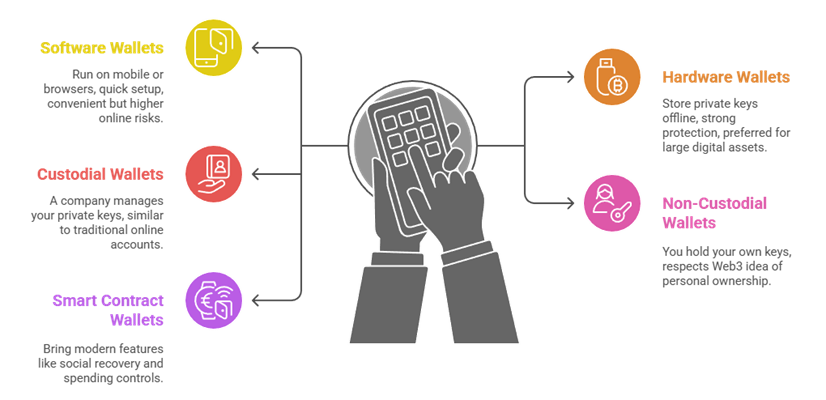
Web3 wallets are essential tools for managing digital assets in the decentralized world. They help you store private keys, interact with blockchain apps, and maintain control over your crypto. I like how they give real ownership without depending on banks or centralized platforms. With many options available today, it is important to know the different types and choose what fits your needs best.
1) Software Wallets
These run on mobile or browsers. They are quick to set up and great for everyday transactions. They stay online which increases convenience but also online risks.
2) Hardware Wallets
These store private keys offline. They are known for strong protection and are preferred for holding large digital assets. I trust them when security matters most.
3) Custodial Wallets
A company manages your private keys for you. This feels similar to a traditional online account. It is easier for beginners who want support and less responsibility.
4) Non-Custodial Wallets
You hold your own keys. This respects the core Web3 idea of personal ownership. My view is that many users enjoy the freedom but must stay careful.
5) Smart Contract Wallets
These bring modern features like social recovery and spending controls. They help reduce risk and make decentralized apps simpler for new users.
How to Choose the Right Web3 Wallet?
Web3 wallets must ensure secure digital ownership while keeping access smooth and reliable for all users. It is important to know the best way tools protect assets, support growth and deliver hassle-free setup. Our experts aim to provide a helpful, accurate and trustworthy solution for better decisions.
- Security and Backup: Our team chose based on strong encryption, recovery secure access controls, so you can protect digital assets safely.
- User Experience: We made sure to shortlist wallets with ease of use so beginners thrive and users manage portfolios smoothly.
- Compatibility: Experts selected based on device support and blockchain compatibility ensuring your assets move flawlessly across platforms for users.
- Community and Reputation: We chose based on trusted brand presence communities consistent updates so reliability remains strong without compromise long term.
- Features and Growth: Our team chose wallets offering innovative features tools future upgrades ensuring productivity improves and user needs consistently supported.
Web3 Wallet Security for Users
Web3 wallet security for users is one of the most important parts of managing digital assets today. Since these wallets give you direct control over your private keys, the responsibility for protection is in your hands. Strong security starts with choosing a reliable wallet that offers advanced protection features like biometric login, multi-factor authentication, and hardware wallet support. I always prioritize wallets that allow offline key storage to reduce hacking risks.
Seed phrases must be kept safe. Store them offline and never share them with anyone. Many people lose funds because they save their recovery phrase on cloud storage or send screenshots. Avoid public Wi-Fi when accessing your wallet because it increases exposure to threats. My advice is to review permissions before connecting your wallet to dApps. Reject anything that looks suspicious.
Web3 technology continues to improve. Some wallets now include social recovery and spending limits for extra safety. Good habits and trusted tools together create a secure Web3 experience without stress.
Common Wallet Security Pitfalls
Here is the bullet format for Common Wallet Security Pitfalls:
- Saving seed phrases on cloud storage or taking screenshots that can be exposed by hackers
- Using weak passwords that are simple to guess or reused on multiple platforms
- Connecting wallets to unknown or risky dApps without checking permissions
- Clicking phishing links sent through emails, social media, or fake wallet pop-ups
- Keeping private keys on devices that are not protected or updated
- Relying only on hot wallets for large amounts of crypto instead of adding hardware security
- Ignoring wallet updates that include important security improvements
- Sharing wallet details with others who promise quick profits or support
- Using public Wi-Fi networks to access a wallet which opens the door to data theft
- Not enabling two-factor authentication when available for stronger protection
How do I Create a Web3 wallet?
- Choose a trusted Web3 wallet app or browser extension from an official source.
- Install the wallet and follow the on-screen setup instructions.
- Create a strong password to protect access to your wallet.
- Securely save the seed phrase offline in a private location.
- Confirm the recovery phrase to complete the setup.
- Add crypto or connect to a blockchain network to start using your wallet.
Verdict
In forming my verdict on the best Web3 wallets, I selected these top choices based on their security posture, usability, and long term potential to support key evolving user needs.
- Zengo: Zengo earns its place for strong MPC security, onboarding, and a recovery model that supports participation.
- Ledger Flex: Ledger Flex stands out for its hybrid hardware design that merges cold security with adaptable connectivity.
- MetaMask: MetaMask remains essential for broad dApp access and deep integrations, and I value its ongoing cross chain improvements.
FAQs
What’s a Web3 wallet?
A Web3 wallet is a digital tool that stores your crypto assets and enables you to interact with decentralized applications (dApps). It holds private keys, allowing you to control your funds directly without a bank or third party. Web3 wallets support tokens, NFTs, and on-chain identity for decentralized experiences.
What are the benefits of Web3 wallets?
Web3 wallets offer full ownership of your assets, easy access to decentralized apps, cross-chain functionality, and support for NFTs and DeFi. They give users more privacy, global access, and the freedom to transact without traditional financial restrictions.
Are Web3 wallets safe?
They are safe when used correctly. Security depends on protecting your private keys and seed phrase. Non-custodial wallets provide full control but require responsible management. Hardware wallets, strong passwords, and avoiding phishing links help keep assets secure.
What’s the difference between custodial and non-custodial wallets?
Custodial wallets store your private keys for you, offering convenience but less control. Non-custodial wallets let you fully own your keys and assets, increasing security and independence but requiring careful key management. The choice depends on accessibility versus self-sovereignty.
What’s the difference between Web3 wallets and traditional crypto wallets?
Traditional wallets focus mainly on storing and transferring cryptocurrencies. Web3 wallets expand functionality by enabling login to dApps, minting NFTs, staking, governance participation, and interacting across decentralized ecosystems. They serve as your identity and access point on blockchain networks.
Do I need more than one Web3 wallet?
It’s optional, but many users keep multiple wallets for security, organization, or separating DeFi, NFTs, and long-term holdings. Using dedicated wallets helps reduce risk if one address or device is compromised.
Can I connect one wallet to multiple dApps?
Yes. Web3 wallets are designed for multi-dApp use. You can connect the same wallet to various platforms for trading, gaming, NFTs, and DeFi. Just always verify the dApp’s legitimacy before connecting to protect your assets.