Key Takeaway
A wallet address is your public destination for receiving crypto. It works like an account number on-chain. For address viewing and sending, many users rely on tools like MetaMask, Trust Wallet, Coinbase Wallet, and Ledger.
- A wallet address is public, but it should still be shared carefully.
- Each blockchain uses its own address format and checksum rules.
- Sending to the wrong network can cause permanent asset loss.
- Addresses are not the same as private keys or seed phrases.
- Always verify the first and last characters before sending.
A wallet address looks simple, but mistakes get expensive fast. The wrong network selection can strand funds. A copied address with one altered character can misroute assets. Fake apps can also swap clipboard addresses silently. I have seen traders lose money from rushed sends. Improper tools add more risk during market volatility. Trusted tools reduce errors and improve confirmation steps. This guide explains wallet addresses clearly. It also reviews tools that help you send safely.
What Is a Wallet Address?
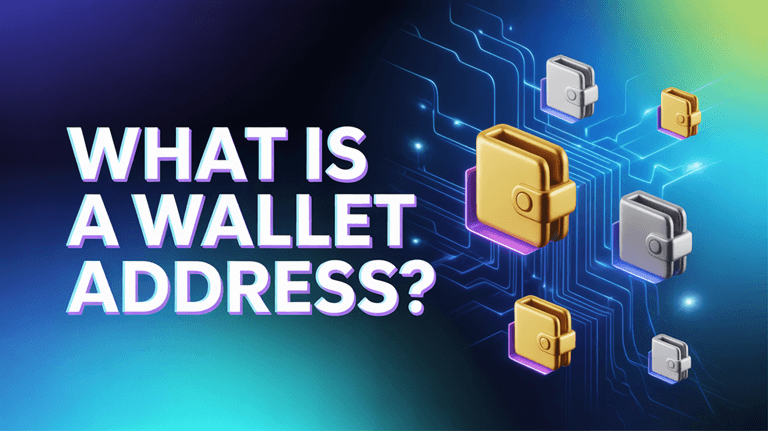
A wallet address is a unique string of letters and numbers used to send and receive cryptocurrency on a blockchain. It works much like an email address or bank account number, but for digital assets such as Bitcoin, Ethereum, or other cryptocurrencies.
How a Wallet Address Works
A wallet address works as a digital destination where crypto can be sent or received. To understand this, it helps to know how public and private keys function together. A public key helps create the wallet address, while the private key proves ownership. The private key must stay secret because it controls access to funds. I always explain this as a lock and key system where the address is visible, but the key stays hidden.
Wallet addresses are generated using cryptographic math. This process turns a public key into a shorter, readable string. Each address is unique and tied to one wallet. Blockchain networks use these addresses to record every transaction in a transparent way.
When a transaction happens, the sender signs it using their private key. The network then checks this signature and broadcasts the transaction. Miners or validators confirm it and add it to the blockchain. Once confirmed, the receiver’s address shows the updated balance. This flow from sender to network to receiver keeps the system trust-based without a central authority.
Wallet addresses can be shared publicly because they cannot reveal the private key. Sharing an address only allows others to send funds, not take them. In my experience, this design builds both safety and openness, which are core ideas behind blockchain technology.
Components of a Wallet Address
A wallet address may look like a random mix of letters and numbers, but each part has a purpose. Understanding these components helps beginners avoid mistakes and build confidence when sending or receiving crypto. I have seen many users struggle simply because they did not know what each part means.
Alphanumeric structure: A wallet address is usually made of letters and numbers together. This format helps create a huge number of unique combinations. It also improves security and reduces the chance of two users having the same address. Some blockchains avoid similar-looking characters to prevent confusion, such as mixing up zero and the letter O.
Length of typical wallet addresses: The length of a wallet address depends on the blockchain. Bitcoin addresses often range from 26 to 35 characters. Ethereum addresses are usually 42 characters long, including the prefix. Other networks may be shorter or longer. Length matters because it helps systems quickly confirm whether an address format is valid before a transaction is sent.
Prefixes and what they indicate: Prefixes are the first few characters in a wallet address. They often show the network or address type. For example, Bitcoin addresses may start with “1”, “3”, or “bc1”. Ethereum addresses usually start with “0x”. These prefixes guide wallets and exchanges on how to process the transaction correctly.
Checksum and error detection: Many wallet addresses include a checksum. This is a built-in safety feature that helps detect typing errors. If even one character is wrong, the checksum fails and the transaction will not go through. In my experience, this small feature prevents many costly mistakes.
Case sensitivity: Some wallet addresses are case-sensitive, while others are not. Ethereum uses mixed-case formatting as an optional error-checking method. Bitcoin addresses are usually not case-sensitive, depending on the format. Always copy and paste addresses to avoid issues.
Types of Wallet Addresses
When people ask what a wallet address is, the next natural step is to understand the different types available. Each type of wallet address serves a specific purpose and works on a specific blockchain. Knowing these differences helps users send and receive digital assets safely and with confidence. In my experience, beginners often mix address types, which can lead to errors, so clarity here matters.
1. Bitcoin (BTC) Addresses
Bitcoin has several address formats that evolved over time.
- Legacy addresses usually start with “1”. They are older and still valid but often have higher transaction fees.
- SegWit addresses start with “3”. They improved efficiency and reduced fees compared to legacy ones.
- Native SegWit (Bech32) addresses start with “bc1”. These are the most modern Bitcoin addresses and are widely recommended today because they are cheaper and more efficient.
Each Bitcoin address type works only on the Bitcoin network. Sending other coins to them can result in permanent loss.
2. Ethereum and EVM-Compatible Addresses
Ethereum wallet addresses start with “0x”. They are used not only for ETH but also for many tokens built on Ethereum. These same address formats are used by other EVM-compatible networks like BNB Chain, Polygon, and Arbitrum.
Even though the address looks the same, the network must match. Sending funds on the wrong network is a common beginner mistake.
3. Token-Specific Addresses
Some blockchains use one address for many tokens, while others use unique structures. For example, Ethereum uses one address for ETH and all ERC-20 tokens. In contrast, some networks require memo or tag fields along with the address. These extra fields help exchanges identify users correctly.
4. UTXO vs Account-Based Addresses
Bitcoin uses a UTXO model, where funds come from multiple small outputs. Ethereum uses an account-based model, where balances update directly. This difference affects how addresses behave behind the scenes, even if users do not see it.
5. Smart Contract Addresses
Not all wallet addresses belong to people. Some belong to smart contracts. These addresses hold funds and follow coded rules. You interact with them when using decentralized apps or swapping tokens.
6. Exchange Deposit Addresses
Exchanges generate temporary or fixed deposit addresses for users. These are still wallet addresses, but they are controlled by the platform. I always recommend checking the network and memo details before sending funds.
Understanding wallet address types helps prevent costly mistakes and builds confidence when using digital assets. Each type exists for a reason, shaped by security needs, speed, and network design.
Examples of Wallet Addresses
A wallet address looks different depending on the blockchain. Knowing these patterns helps avoid sending funds to the wrong network. I often remind readers that even one wrong character can cause permanent loss.
| Blockchain | Key Format Traits | Example Wallet Address | Expert Notes |
| Bitcoin (BTC) | Starts with 1, 3, or bc1 | bc1qxy2kgdygjrsqtzq2n0yrf2493p83kkfjhx0wlh | Newer formats like bc1 are more efficient and widely supported |
| Ethereum (ETH) | Starts with 0x and has 40 characters | 0x742d35Cc6634C0532925a3b844Bc454e4438f44e | Same address can work for many ERC-20 tokens |
| Solana (SOL) | Long mix of letters and numbers | 4Nd1mQ7Z6YcJp9xYzF6sQKxvJ8bP9RzKkTqL1a2b3C | Case-sensitive and unique per wallet |
| Bitcoin Cash (BCH) | Starts with q or p | qpm2qsznhks23z7629mms6s4cwef74vcwvy22gdx6a | Helps prevent confusion with Bitcoin |
How to Find Your Wallet Address
Finding your wallet address is a basic but important step when using crypto. A wallet address is a public ID used to receive funds. Each platform shows it slightly differently, but the process is simple once you know the path.
Using a Mobile or Desktop Wallet
- Open your wallet app.
- Select the coin you want to receive.
- Tap Receive or Get Address.
- Your wallet address appears as a long string of letters and numbers.
- You may also see a QR code for quick sharing.
Important Note: I recommend copying the address instead of typing it. This reduces mistakes.
Using an Exchange Wallet
- Log in to your exchange account.
- Go to Wallet, Funds, or Assets.
- Choose the coin.
- Click Deposit.
- Select the correct network.
- Copy the generated address.
Important Note: Different networks can create different addresses. Always match the network with the sender.
Using a Hardware Wallet
- Connect your device to its app.
- Choose the asset and confirm on the device.
- The wallet address will then appear on screen.
From my experience, checking the address before every transfer is essential. Wallet addresses are case-sensitive and permanent. Sending funds to the wrong one can result in loss. Always verify the coin type and network before using your wallet address.
How to Use a Wallet Address
A wallet address is used to send and receive cryptocurrency. You can think of it like an email address, but for digital money. When someone wants to send you crypto, you share your wallet address with them.
To receive crypto, copy your wallet address from your wallet app and send it to the person paying you. Many wallets also show a QR code, which makes sharing faster and safer. I suggest using the copy button instead of typing the address to avoid errors.
To send crypto, paste the receiver’s wallet address into your wallet. Then enter the amount and choose the correct network. This step is very important because each blockchain uses its own type of address. Sending funds on the wrong network can cause permanent loss. From my experience, beginners should always double-check the network name before confirming.
Wallet addresses are safe to share publicly. They only allow others to send funds, not access your wallet. Never share your private key or recovery phrase, as those control your assets.
Using a wallet address correctly helps you move crypto safely and with confidence.
Wallet Address vs Private Key vs Seed Phrase
| Aspect | Explanation |
| Overview | In the topic What Is a Wallet Address?, it is important to clearly understand how a wallet address, private key, and seed phrase differ. Many beginners confuse these terms, yet each plays a very different role in crypto ownership and security. I have seen that clarity here helps users avoid common and costly mistakes. |
| Wallet Address | A wallet address is the public ID you share to receive crypto. Think of it like an email address for payments. Anyone can see it, and it is safe to share. It does not give control over funds. Each blockchain has its own address format, which helps networks route transactions correctly. |
| Private Key | A private key is a secret code that proves ownership of the wallet. It allows signing transactions and moving funds. If someone gets this key, they can take full control. This is why private keys must never be shared. In my experience, beginners often underestimate how sensitive this data is. |
| Seed Phrase | A seed phrase is a group of 12 or 24 simple words that can recreate the private key. It works as a full backup of the wallet. If a device is lost, the seed phrase restores access. Anyone with this phrase controls the wallet completely. |
| Key Differences | The wallet address is public and safe to share. The private key is secret and controls spending. The seed phrase is the master backup that can regenerate all keys. Each serves a unique security layer. |
| Practical Advice | Always store seed phrases offline. Never type them into websites or share screenshots. Use hardware or trusted software wallets to reduce risk. Clear understanding builds safer crypto habits. |
Are Wallet Addresses Anonymous?
Wallet addresses are often described as anonymous, but that idea is only partly true. They do not show personal details like a name or email by default. Still, activity linked to an address can reveal useful clues over time.
Pseudonymity vs Anonymity: Most blockchains work on pseudonymity rather than true anonymity. This means users are represented by wallet addresses instead of real identities. I often explain that pseudonymity hides who you are, but not what your address does.
Public Visibility on Blockchains: Blockchain networks are usually public and open for anyone to view. Wallet addresses, balances, and transaction records can be checked by anyone using a block explorer. This openness supports trust but also reduces privacy.
Address Tracking and Transaction History: Each transaction stays permanently linked to a wallet address. Over time, tracking tools can follow how funds move between addresses. These patterns can make behavior easier to understand even without names attached.
How Identity Can Sometimes Be Linked: Identity can be linked when people use exchanges that require identity verification. Posting wallet addresses on websites or social platforms can also connect them to a real person. Small digital traces can slowly form a clear connection.
Privacy-Focused Cryptocurrencies: Some cryptocurrencies are designed to improve user privacy by hiding sender, receiver, or transaction amounts. These systems reduce how much data is visible on public ledgers. From my experience, they require careful use and a good understanding of how privacy features work.
Security Best Practices for Wallet Addresses
When managing wallet addresses, security is not optional. It directly protects your funds and your peace of mind. In my years of working with digital wallets, I have seen that most losses happen due to small, avoidable mistakes. Understanding how wallet addresses work and how to handle them safely is a key part of learning what a wallet address is and how to use it responsibly. Good habits, not complex tools, often make the biggest difference.
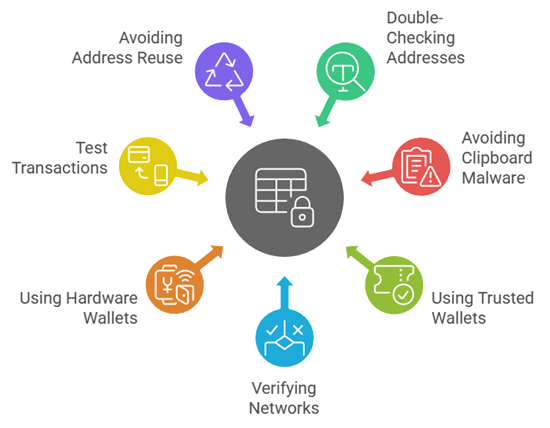
Below are practical and beginner-friendly practices that help reduce common risks. Each point focuses on real-world use and everyday decisions users face when sending or receiving crypto.
- Double-checking addresses before sending: Always compare the first and last few characters. One wrong character can send funds to the wrong place.
- Avoiding clipboard malware: Some malware changes copied addresses. After pasting, take a moment to confirm the address is still correct.
- Using trusted wallets: Choose wallets with a strong reputation and regular updates. This lowers the risk of hidden flaws.
- Verifying networks: Make sure the network matches the wallet address type. Sending on the wrong network often leads to permanent loss.
- Using hardware wallets: These keep private keys offline, which adds a strong layer of protection for long-term holders.
- Test transactions: Sending a small amount first helps confirm everything works before moving larger funds.
- Avoiding address reuse when applicable: Some wallets create new addresses to improve privacy and tracking safety.
Common Mistakes to Avoid
When explaining what a wallet address is, I always stress that most crypto losses come from small, avoidable mistakes. A wallet address looks simple, but each blockchain uses its own rules. If those rules are ignored, funds can be lost with no recovery option. My experience shows that beginners often rush transactions instead of checking details. Taking a few extra seconds can protect your assets and build better habits. Below are the most common errors people make and how to think about them in a practical way.
- Sending crypto to the wrong network: Many tokens exist on multiple networks like Ethereum or BNB Chain. Sending on the wrong one can cause permanent loss. Always match the network shown in your wallet before confirming.
- Using incompatible wallet addresses: Some wallets only support specific blockchains. A Bitcoin address cannot receive Ethereum. Compare the address format carefully.
- Copy-paste errors: One missing or changed character breaks the transfer. Always double-check the first and last few characters after pasting.
- Falling for fake addresses or phishing scams: Scammers replace real addresses with their own. Avoid clicking unknown links and verify sources before sending.
- Sending unsupported tokens: Not all wallets accept every token. Check wallet support lists to avoid trapped funds.
FAQs
Can a wallet have multiple addresses?
Yes, many modern crypto wallets can generate multiple addresses from a single wallet using hierarchical deterministic (HD) technology. This improves privacy and organization. Each address can receive funds independently, yet all are controlled by the same private keys or recovery phrase, allowing unified access and management.
Do wallet addresses expire?
Most wallet addresses do not expire. Once generated on a blockchain, an address remains valid indefinitely. However, some platforms or exchanges may rotate deposit addresses for internal tracking. Even then, old addresses usually still work, but users should always confirm the active address before sending funds.
Can I change my wallet address?
You cannot “edit” an existing wallet address, but you can generate a new one. Many wallets allow creating multiple addresses under the same wallet for privacy or security reasons. Each new address functions independently, while all remain accessible using the same recovery phrase or private keys.
What happens if I send crypto to the wrong address?
If you send crypto to the wrong address, the transaction is usually irreversible. Blockchains are decentralized and lack a refund mechanism. Funds can only be recovered if the recipient controls that address and agrees to return them. Always double-check addresses and use copy-paste or QR codes.
Are wallet addresses case-sensitive?
It depends on the blockchain. Bitcoin addresses are generally not case-sensitive, while Ethereum addresses are technically case-insensitive but may use checksum casing for error detection. Changing letter case usually doesn’t affect delivery, but altering characters or length will result in an invalid or incorrect address.
Can someone steal funds using only my address?
No, a wallet address alone cannot be used to steal funds. It’s similar to a public account number used only to receive crypto. To move funds, a private key or recovery phrase is required. However, sharing your address publicly can expose transaction history and reduce privacy.